How do we transform traditional schooling?
In terms of learning, we have never had a better framework, than we do today.
For humans to maneuver in this world of options we need to cultivate one skill.
What are the premises of schooling?
Before we present the solutions to the learning crisis, we need to agree on the premises. Why are we being schooled in the first place? To live a happy life, to be prepared for the future, or to help preserve the planet? Either way, the current learning principles are not optimal for us to thrive or find our individual strengths and desires.
The brain is the key to our well-being and happiness
The human brain is the most complex object found in the universe and also the engine of our body. Stimulating our minds, the right way is critical for our well-being and development, why new science and research should be included in how we set-up our learning environments.
The capacity and the potential of the human brain is incredible, and if we learn how to control and stimulate it constructively, we can intuitively create a positive flow for ourselves. To understand ourselves we need to cultivate self-awareness in our learning environments. When we are self-aware, we will learn what is necessary for thriving, why a cultivation of self-awareness will benefit both individuals and societies.
The skill of the 21st century
To thrive in life and to have a positive impact on our surroundings, we basically need one skill: self-awareness. The Internet has made information common property, and the majority of the world now has a daily access to Internet. It has never been easier to learn what we want, why being self-aware makes the world a playground. Self-awareness can be broken down to four elements, that makes growing and learning simple for everyone:
1) Awareness of your strengths and weaknesses
2) Awareness of your interaction abilities and relations
3) Awareness of your sources of energy
4) Awareness of your brain chemistry
Intuitive exploration is important
To find our individual desires we need to explore and make mistakes. Not very different from when we learned to walk or speak. Knowing your strengths gives you power, knowing how to constructively engage with others gives you friends and a network, knowing your energy sources gives you a proactive and positive mindset and knowing how your brain reacts to different activities gives you moderation and respect.
If we allow children to continue their intuitive development, and support them with inspiration and guidance, both individuals and society can thrive. To have faith and create room for development is not rocket science. We just need to look at the principles of traditional schooling.
Changing the principles
Though the possibilities of learning have been enhanced, the conditions of learning are still being detained by the principles of traditional schooling. To help schoolchildren become more self-aware and explore their creativity, we first of all need to rethink the principles of traditional schooling. We suggest four replacements to these principles based on results from newer educational approaches.
1) Learning through obligation → Learning through inspiration and guidance
2) Standardized measurements → Individual encouragement
3) Predetermined curriculums → Faith in teacher’s + children’s preferences
4) Fixed schedules → Individual and self-influenced schedules
By removing obligation, grades and curriculums and by giving children influence and options, children can individually thrive through natural, intuitive and explorative learning.
If children learn to understand and benefit from the Internet and use it wisely, it gives them an incredibly power as they can learn what they want. The learning opportunities are infinite in the 21stcentury, why children need inspiration and guidance rather than obligation in order to explore their strengths.
The transformation is ongoing
Learning environments that has faith in teachers and in children’s intuition already exist, and they are currently being implemented around the world with positive effects. UNICEF has created the RIGHTS RESPECTING SCHOOLS, which basically is a certificate to schools that gives children influence on their development and educate them on their rights.
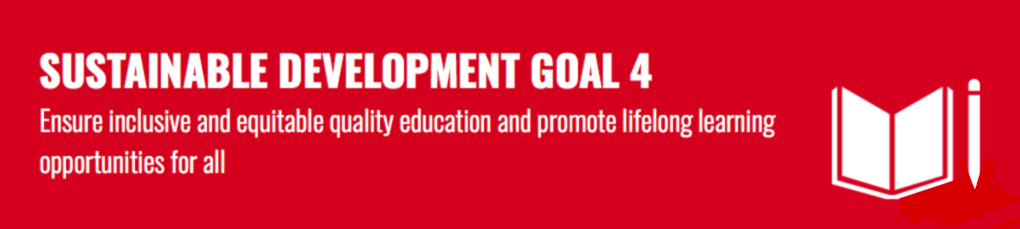
The UN has also inclusive education for all as a part of their SDG’s, which also contrasts the current principles of traditional schooling.
Positive examples
Agile Learning Centers, Montessori Education, Sudbury Schools and the unschooling philosophy are all examples of some of the learning environments that are growing in popularity. The escape of the traditional schooling is also very visible in Denmark, where we are located, where the number of children in our public schools have fallen while the number of children in private and free schools have increased 12 years in a row.
What will we do?
We will not be the revolutionist of traditional schooling. The transformation is ongoing and inevitable, why we strive to accelerate it. First of all, we will inform the public about the side effects of traditional schooling and the benefits of cultivating self-awareness.
We are currently working on fundraising and preparing an awareness campaign on social media. By creating public awareness, we canevoke a political action, and hopefully make Denmark a pioneer in 21stcentury education, so our public schools can start benefiting both individuals and society.
We know it is comprehensive, and this is why we need your help. Do you want to contribute?